韬映资本郭晨凯对话罗杰斯:Uber的理念很好,但我不知道Uber的这种理念会不会有效
编者按:本文来自微信公众号“韬映资本”(ID:ToweringCapital),36氪经授权发布。
韬映资本董事总经理郭晨凯先生(Alfred Guo)与量子基金创始人吉姆·罗杰斯(Jim Rogers)在全球青年创业者大会上针对消费升级、人工智能、医疗健康、交通运输和物流,以及特朗普推行税改等热门话题进行了一场巅峰对话。
关于消费升级
Alfred Guo:For consumption upgrade, I think in China, we can consider in four dimensions maybe. For example, first one maybe the clothes and FMCG(fast moving consumer goods). Second is food and beverage. And third mainly on real estate. And fourth is on the transportation.
I think we may discuss about real estate today. The Chinese regulator is really not welcoming the speculators in this area but we think the rental market in China is booming so any implication in that area for rental market in China?
郭晨凯:关于消费升级,我们认为,在中国我们可以考虑四个维度。第一个维度是服装和消费品;第二个可以关注的是食品和饮料;第三个维度是房地产和租赁市场;最后一个维度是交通运输和物流。
关于房地产,中国的监管机构,并不希望在房地产行业有投机商的出现,不过我们发现中国房地产的租赁市场也正在快速繁荣发展。对于中国的租赁市场,您是怎么看的呢?
Jim Rogers : Well, most markets in China will continue to boom because China is growing. There's 1.3 billion people in China. China is getting more and more prosperous every year. So most parts of the Chinese economy are booming and there's a shortage of nearly everything as far as space is concerned especially for many kinds of commercial spaces. So, yes, if you find the right location and you find the right managers then you're going to make a lot of money.
It's as simple as that. It's as difficult as that just because I said words that are simple does not mean it's simple to execute, as all of you know. But if you can find the right people, the right managers and the right locations and your costs are not too high you should do very well in the new China. All of you should.
吉姆·罗杰斯:我觉得中国的市场会进一步繁荣发展,因为中国在不断地发展。中国有十三亿人口,每年都会越来越繁荣,中国经济方方面面都会进一步发展的。许多资源都是稀缺的,商业房地产资源也是一样的。所以是的,如果你能找到合适的地点,好的管理者,你就能赚到钱。
事情就是这么简单,但事情也是这么难,因为我刚说出这番话很简单,但是不意味着执行起来很简单,正如你们所知道的。如果你们能找到对的人,好的管理者,在合适的地点,加上一个不太高的成本,你们就可以在中国做得非常好。你们所有人都是这样的。

郭晨凯:另外一点,对于租赁市场,我认为,在纽约,或者说在全球也是比较普遍的,大多数地产都是去中心化的,分散的,被不同的地产商持有。对于分散的资产,想要找到统一的合格的管理者,是很难的。
Jim Rogers : I know it's hard. I said it's easy to say those words. It's extremely easy to say those words. It's hard to execute. Everybody in this room has a very, very, very good plan and a very, very, very good idea. Execution is something else.
吉姆·罗杰斯:我知道,这句话说起来容易、执行起来难,在座各位都有他们自己的计划和很好的创新理念,执行却是另当别论了,是非常难的。
关于交通产业
Alfred Guo:So for the transportation, I think in China DD or Uber has already got a big market share here. So any implication about that? I think it's a huge demand in China nowadays.
郭晨凯:对于交通产业,在中国,滴滴、Uber都已经占有很大的市场份额了。您怎么看中国的出行市场?我认为今天,在中国出行还是有一个很大的需求。
Jim Rogers : Well, Uber which you mentioned seems to have a very good idea but Uber has lost hundreds of millions of U.S. dollars and continues to survive by raising hundreds and millions of U.S. dollars. It's a fabulous idea. I don't know if it's ever going to work. Most companies I have seen throughout history who use this procedure do not succeed in the end. It's fine as long as people give you, give you, give you money and there's a lot of easy money in the world today.
But Uber so far and maybe they're going to make billions, but so far they have done nothing but raise money which is great for the people getting the money. I'm not so sure the people giving the money are going to succeed in the end. I hope I'm wrong. But most of -- many times in history, that model has failed in the end. Thank you.
吉姆·罗杰斯:Uber看起来是一个很好的创新理念,但是它已经亏损了上亿美金了,Uber还是靠不断地筹集上亿的资本来生存。Uber的理念很好,但我不知道Uber的这种理念会不会有效。纵观历史,这种商业模式最终都没有获得成功。虽然现在看起来还好,人们只要不断地给你钱,投资,这样的话也可以运行。
但是,也许Uber未来可能能赚几十亿,但是目前为止他们什么也没有做成,就是筹集了很多钱、融到了很多钱。我不确定最终给Uber投资的这些人会不会成功。我希望我是错的,但是历史上很多次,这种商业模式最终都是失败的。
Alfred Guo:It seems Uber is on the way of making profit.
郭晨凯:Uber看起来很快就能开始盈利了。
Jim Rogers : We'll see. I don't know. All I know is so far their model has been to raise money, raise money and not raise money, raise billions of U.S. dollars. And then turn around and lose it. Their response is we're changing an industry. It's a total revolution and it is a total revolution. But historically, if you don't make money somewhere along the line, you collapse. We will see.
Because especially in this case, you know, they are totally disrupting an industry which is very good. It's always good for an industry to be disruptive but eventually the people being disrupted figure out a way to come up with their own plan to counter and maybe they at least historically, maybe those people will have a plan which will disrupt the disruptors. Especially the disruptors who does not make money. You'll ask me in five years we'll know.
吉姆·罗杰斯:咱们拭目以待吧,我只是觉得截至目前他们的模型就是不断地融钱,他们融到了上10亿的美金,融到了很多钱,之后又亏损了上亿。他们的回应是我们正在改变整个行业,这是一个彻底的革命。但纵观历史,如果我们在整个链条上没有利润的话,最后还是会倒闭的、亏损的。特别是在这个案例上,他们已经扰乱了整个市场,一个原本已经发展得很好的市场。尽管对一个行业来说,有变革是一件好事。但是最终被扰乱的人们会找到一个更好的方法去面对这个问题。至少在历史上,这些人会有一个完善的计划来面对这些扰乱市场的人,特别是这些不能盈利的扰乱者。五年后你再问我这个问题,我们再来看看。
Alfred Guo:So for transportation. For example, the main line logistics in China. Also a huge demand. The two ways of main line, like the express company. The buy the airplanes, the cargos. The second, the branch line. For example, the last one kilometer in the community. So what kind of the that area (do you think )in China?
郭晨凯:对于交通行业,比如说,第一个,物流,中国的物流也有巨大的需求,像很多快递公司他们买飞机、货机来进行快递运输。第二个,关于社区中的“最后一公里”的运输问题您是怎么看的?
Jim Rogers : Well, not just in China, everyone in the world. Now we have drones. I don't have a drone. I don't know how to use a drone but why can't drones do the last kilometer or the last two kilometers? I don't know. I don’t know technology, throughout history, technology has changed, and revolutionized a lot of things. This is changing too. But it's not just China. Yes, yes, you're in China, you see China, there's lots of exciting changes in China but it's true in New York, it's true in Brazil. It's true in many, many parts of the world. This kind of revolution you're talking about whether it's Uber or delivering the last kilometer or two. Come up with the answers and you'll be very rich.
吉姆·罗杰斯:不仅仅在中国,也是全球的。我们现在有无人机了,我自己没有开过,我也不知道怎么使用无人机,但是无人机是一个非常好的,能够解决最后一公里的工具。我不太了解科技,但科技,从历史上来看的话,它可以改变很多东西。技术的演进不光是在中国很重要,现在在纽约、巴西,在很多地方,技术的演进都非常重要,像我们刚才谈到的Uber,当然都是基于科技的公司。如果能够把握好技术的推进,能够变得变成非常富足的公司。

韬映资本董事总经理 郭晨凯
关于人工智能
Alfred Guo:So for the hot topic here is about artificial intelligence. I think in China there are more on the research area. But according to the press, in Shenzhen, they just released the autonomy in public transportation (only in two or three stations). I think it's the first application in China or all over the world. I think in United States autonomy is still, I mean, still in lab I think.
郭晨凯:现在非常热的话题,就是人工智能,在中国人工智能也是非常重要的研究领域。根据深圳媒体的报道,在小范围内,现在深圳交通自动化实现了,我想这可能是中国,或者是全世界自动化的先例。您如何看待这个事,是不是在美国自动化仍然处在试验的阶段呢?
Jim Rogers : Well I want to say again what I said this morning. I have a great deal of confidence in Chinese ingenuity, engineering and initiative. You probably don't know because you're not out there in the world like I am but many people say that Chinese just copy the Chinese cannot innovate, etc., and I say to them, what are you talking about? This is not 1850. This is 2017.
There are many, many, many educated, innovative, enterprising ambitious Chinese who are educated and many can educate themselves. So people still believe it or not people still sell China short. People still think that China cannot do it. Many people still think that China will collapse. I cannot tell you how prevalent this view is in the world.
There's still people in America -- I'm American so I will use America but there are people who make their living selling books and speeches about how China's going to collapse and China will have problems. There's no question. Everybody who rises has setbacks whether you're an individual or a family or a company or a country, nothing is straight up. You go up like this. Or the ones who go straight up go straight down but everyone else goes like this.
America became the most successful country in the 20th century. Along the way we had 15 depressions with a D. We had a horrible Civil War we had massacres in the street. We had very little rule of law and yet America became extremely successful. So, yes, there are going to be problems in China. I don't know what or when but I know that everybody who rises has problems. That's the way the world works but in the west there are many people who say China will collapse any day and go back to being a backward hopeless poor nation again. They do not understand what's happening in China. They do not understand Chinese history. There are many people in China who do not understand what's happening in China but who do not understand Chinese history but this is normal to have problems.
I tried to explain to people in the west there's a wonderful word in mandarin. You know the word “weiji” that means opportunity and disaster are the same thing. And that word does not exist in English. We do not -- we haven't been around thousands of years like you.
But when you see problems in China, please remember “weiji” , because the problems are also going to be opportunities and China's not going to collapse any day. There'll be problems but when I see problems in China, my children are not going to stop learning mandarin and start learning Danish or something. My children are going to continue to speak mandarin and know China.
吉姆·罗杰斯:实际上我对中国创新、创意非常有信心,还有他们各种新的想法,我非常有信心。你们从外界来看中国肯定不清楚,很多外国人说,中国人只会模仿、抄袭,不是这样的,根本不是这么回事儿,这不是1850年,这是2017年。有很多受过教育,有创新意识,有抱负的中国人,他们不仅受过教育,很多还能够进行自我教育。不管你们承认不承认,现在中国正在腾飞。
很多人认为中国人做不好、中国崩溃论、中国必衰,这都是错误的。我来自美国,美国很多人写了很多书,说中国肯定会衰亡的。任何一个国家在上升期的时候,难免会遇到一些挫折,不管是国家、公司、家庭、个体,你不可能一帆风顺,你可能是经历了这样一个波峰,然后往下走,然后会再上去,它是一个曲线成长。
这是必然的,美国在20世纪是最成功的国家,在这一路走来,我们发生过15次经济大萧条,爆发过民主战争,马路上也会发生大屠杀这样的事件,我们只有很少的法律,但是美国还是变得异常成功。是的,在中国的发展过程当中,肯定也会面临这样、那样的问题,但是我所知道的是,每个人,包括每个国家发展都会遇到一些挫折。现在西方说,中国一定会衰亡、衰败,会变成一个没有希望的、落后的一个国家。他们,实际上没有看到中国的历史,没有了解一个真实的中国,也没有了解到中国现在企业所焕发出的创意和活力。这也很正常,在发展的道路上有一些问题。
我在西方经常会跟他们解释,在汉语里面有一个非常好的词“危机”,我经常会用这个词跟西方人解释中国的情况,在汉语里面,危机这个词不光是说面临了危险、困难,还意味着很大的机会,这个词汇在英语里实际上没有对等词。我们没有像你们这样的几千年历史,当我们看待中国的问题,大家应该借助危机这个词,因为问题的反面也意味着机会,中国不会衰亡、衰败。
如果说,我看中国的问题大于机会的话,我就不会让我的孩子来学习中文,我的孩子会继续学习中文,更多地了解中国。
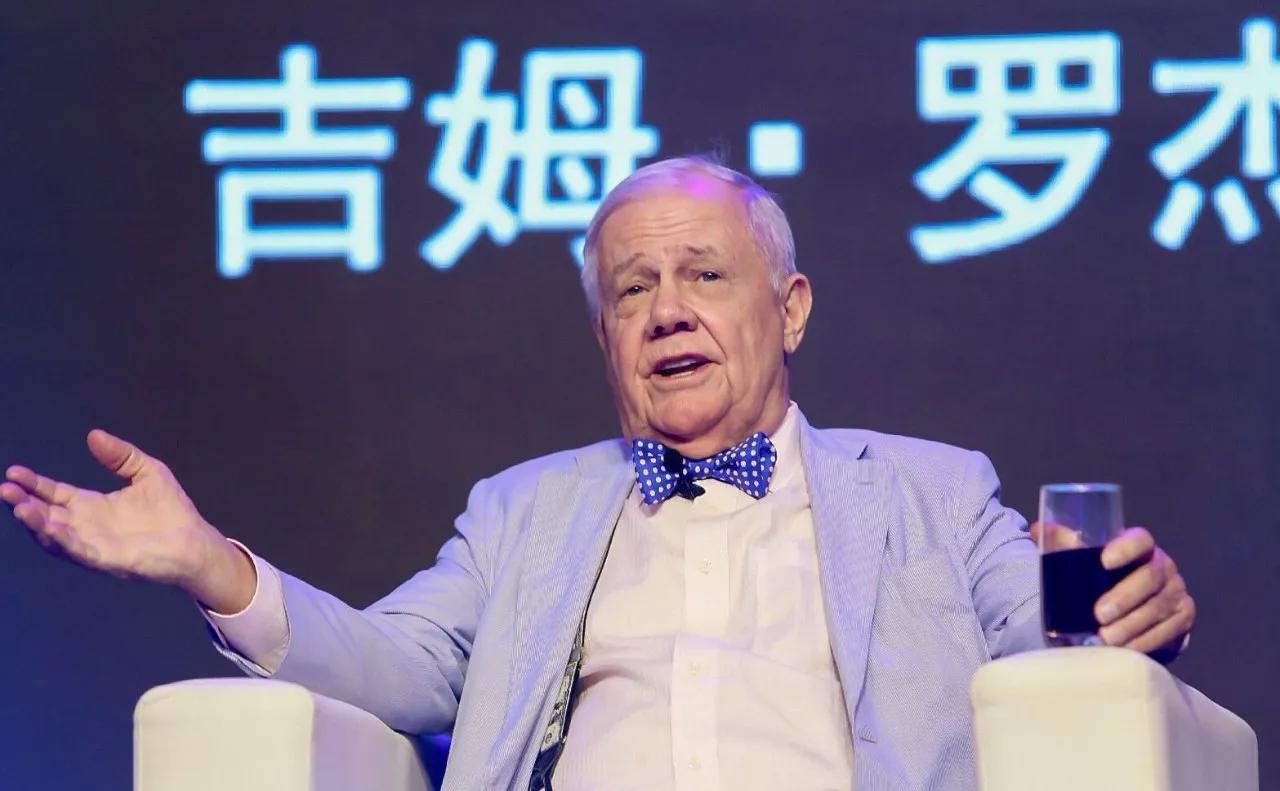
量子基金创始人 吉姆·罗杰斯
Alfred Guo:And also you will help your kids to open Chinese stock market accounts?
郭晨凯:您会帮助您的孩子开中国股市的账户吗?
Jim Rogers : My daughters already have a stock market account. They don't know it. I opened my first stock market account in China many, many years. You weren't even born when I opened my first Chinese stock market account.
吉姆·罗杰斯:我的女儿已经有中国股市的账户了,只是她们不知道。我很多年前就开了中国股市的账户,在你还没出生的时候,我就已经有了中国股市账户。
Alfred Guo:So for artificial intelligence, many of the enterprises adopt technology in the investment advisors. Is that an emerging market?
郭晨凯:很多企业在投顾中采用了人工智能?这是一个新兴的市场吗?
Jim Rogers : Some will going to make huge fortune, not me because I don't know artificial intelligence. Some people will make huge amounts of money in fin-tech with artificial intelligence. I mean, if you can gather the key to any success whether it's an art or politics or literature or military, doesn't matter. If you have more intelligence than other people you're going to be successful. We already talked a bit this morning about a company I invested in a fin tech company. I don't know how she knew but, yes, that's going to change the world. It's not going to change for me because I can still be successful enough doing it my way but many people are going to do -- and it's not just investing. Artificial intelligence is going to change everything we know whether it's sports or art or movies, or entertainment, politics, milltary, everything, if you know what you're doing, pursue artificial intelligence. I don't know what I'm doing so I'm not going to do it.
吉姆·罗杰斯:是的,有一些人能从中赚大钱,但不是我,因为我不了解人工智能。有一些人能通过使用人工智能在金融科技领域大赚一笔。我的意思是,如果你们能找到成功的方式,无论是通过艺术、政治、文学还是军事,都无所谓。如果你比其他人聪明,你就能获得成功。
今天早上我们已经谈到了我投资的一家金融科技的企业,我不知道他们现在做的具体怎么样,但是金融科技将会改变世界,对我来说不会有什么改变,但是我依旧能获得成功,因为我有我成功的方式。
金融科技不光是一个投资的问题,人工智能将会改变所有事情,体育,艺术,电影,娱乐,政治,甚至于一切。如果你能够有很好的思路,那就做人工智能。我不了解人工智能,所以我不会做这个。

关于医疗健康
Alfred Guo:So for the health industry in China, I mean, I think about 5-10 years ago people always get serious diseases and they go to the doctor and do surgery, operations. So now when people get richer they start to focus on their health problems so I think many, many companies are doing it in that way. It's not because if you go to doctors or go to hospitals it's kind of monopoly industry in China. Private hospital. private doctors, doctors is limited. But for health, it's a huge industry.
郭晨凯:对于医疗健康行业,在5到10年前,人们生病了才会去看医生、做手术,现在人们富起来了,他们开始关注健康问题。我想,很多企业正在关注到这一点,并由此进入医疗健康行业。在中国,去看病看医生,医院更像是一个垄断性的行业。但私人医院,私人医生,是稀缺的。对于大健康领域,还存在很大的市场空间。
Jim Rogers : One of the great investment opportunities in our lifetime is health care in China. Don't do it unless you know what you're doing but there are enormous opportunities in China for health care. As people get more successful they are willing to spend more on their health and they do spend more on their health. I don't have to tell you. I mean, I've been coming to China for 34 years. Yes, China needs more health care and better health care.
Many places need more and better health care. You have the money and the brains develop more and you will. You also have traditional Chinese medicine which may or may not be successful. So you have two different avenues of possible health care in China and maybe you'll develop your own. Yes, I am looking for and hope to find more investment scene in Chinese health care.
吉姆·罗杰斯:在我的职业生涯中,其中一个重大的投资机会就是中国的医疗保健行业。如果你不了解,就不要去做。可以说,医疗健康对中国来说有非常非常大的机会,你说的很对,现在人们越来越成功了,钱也多了,非常关注自己的健康问题,愿意花更多的钱在自己的健康问题上。我来中国已经34年了,是的,中国的确需要越来越多和越来越好的医疗服务。
许多地方都需要更多、更优质的医疗服务。人们有钱了,也更有意识了,就会需要更多的医疗服务。你们有传统的中医中药(有可能成功也有可能不),所以你们有两种不同的医疗服务的途径,你们可以发展属于自己的医疗服务,我希望能够在中国的医疗保健行业方面发现更多值得投资的地方。
关于环保
Alfred Guo:Okay. Focusing on the environment in Beijing is not that good but I think government is universal so I think it's normal. I think it's universal. When the governments want the economy grow, they will overlook the environmental protection.
郭晨凯:接下来继续讨论环境问题。在北京,空气状况不太好,但我们认为,其实这是一个普遍的全球性的问题。当政府发展经济的时候,往往会忽视环境保护的重要性。
Jim Rogers : The same thing with anything else. Education, health care, environment, fifteen years ago we thought we were going to live in China. Twelve years ago. We thought we were going to live in China and we looked at many Chinese cities but they're all too polluted. I mean, you said it, go outside, you will see but that's true in every Chinese city. Yes, as China got rich you didn't worry about the environment but now you worry about your environment. So somebody's going to make a lot of money cleaning up China.
I have some investments in companies trying to clean up China and there's going to be many more. And by the way I expect economic problems in the west in the next couple of years but when that happens it will affect many companies in China but not affect the ones cleaning up pollution. The people cleaning up pollution in China don't care if America disappears. They don't care if Europe falls into the sea. They're going to be too busy working too hard and making too much money so pollution cleanup in China is one industry that -- another industry in China that has a great future.
吉姆·罗杰斯:教育、医疗、环境都很重要,12年前我们觉得我们会到中国定居,我们看了很多中国的城市,但是城市污染非常严重,你只要出去看一下就知道了。是的,中国越来越富有了,以前可能不太注意环保,现在开始担心污染问题,所以有人将会花很大一笔钱来清洁中国。
我投资了一些环保的企业,有更多的环保企业现在也已经出现了。可以预见的是,未来几年,在西方将陆续有一些经济问题,但是当这个经济问题发生的时候,它将不会影响到中国治理污染的公司。这些公司不关注美国是否会消失,也不在乎欧洲是不是会消失。他们会全神贯注地治理中国环境污染的问题。因此,在中国,治理环境污染的行业也是一个值得投资的领域。
Alfred Guo:Okay. So for health problem I think it's young people will really focus on, because in my company I think the insurance or body check is the must for the employees. Five to ten years ago, it was not a big deal but now I think young people start to focus on their health.
郭晨凯:很多年轻人非常关心健康问题,在我的公司里面体检、买保险,对于员工来说非常重要的,5到10年前还没有这么重要,但现在很多年轻人开始关注这个方面了。
Jim Rogers : It's not just young people or Chinese people. It's old people, middle-aged people, young people, all over the world. Nobody likes breathing bad air. Some of us put up with it for a while as we're getting richer and richer but nobody likes to breathe bad air wherever they are in the world. And whatever ethnic group they are. Not just China. Don't worry. If you can figure out a way to clean up China you can keep the whole world clean and you'll be very rich.
吉姆·罗杰斯:不光是年轻人,不光是中国人。所有人,中年人、老年人、各个地方的人、世界上的人,没有人愿意呼吸肮脏的空气,可能有人忍受了一段时间,但是没有人愿意呼吸不清洁的空气,不管他居住在世界的任何地方,不管他属于哪一个民族或者什么年龄层次。不用担心,如果你们可以想出一些方法,让中国的环境问题得到解决,也可以解决世界上的环境问题,你们就会变得非常富有。
关于美国税改政策
Alfred Guo:Okay so next I think we can talk about the tax overhaul, it's an implication for the American companies. I think they will start moving back?
郭晨凯:我们可以接着谈一下美国刚刚宣布的特朗普的减税计划,这个减税计划会对很多美国企业造成影响,美国企业会开始搬回到本土吗?
Jim Rogers : Well, if the tax bill goes through and it looks like a tax bill will go through first of all cutting taxes is always good. It has been throughout history. If you cut taxes in people in your country have more money to spend. I can spend my money better than Donald Trump can. The Japanese can spend their money better than Mr. Abe can. The British can spend their money better than the government can. Tax cuts are always good. They always have been.
As long as the country can afford. So this will make lot of companies in America do better because people have more money to spend and they will spend it.
Even if they say they won't they can help finance some companies. And the tax bills, there's a lot of American money outside of U.S. because they will be taxed if they took it back. So now that money, much of that money will come back to America which should help one way or another. Even if the companies just pay it out of dividend shareholders there's be more money in the U.S.
One thing that will do is make the U.S. dollar go higher. I own a lot of U.S. dollars partly for that reason but it'll also help many parts of the U.S. economy at least for a year or two. I own a lot of U.S. dollars. For that reason I know that the U.S. dollar is going to go higher. Going to get overpriced. I hope that I'm smart enough when the U.S. dollar gets higher, overpriced, maybe even a bubble, I hope I'm smart enough to sell it.
吉姆·罗杰斯:如果执行这样的减税计划,首先减税当然是好事情,这是有史以来最大的减税计划。我们可以有更多的钱用于消费,超过美国总统特朗普所预想的;日本人民会花比安倍预想的更多的钱。英国人会消费政府所预想的。减税总是好的,一直以来都是这样。
只要政府能够承担,这会让很多美国企业变得更好,因为人们将会有更多的钱用于消费。减税,能让很多美元回到美国本土,因为他们不需要交更多的税。如果很多公司利润多了,还可以投别人,或者别的行业,或者到美国之外去投资。
美元也会持续走高,我持有很多美元,一部分原因也是因为我知道减税将会在一两年内刺激美国的经济发展。随着美元升高,我希望我能够足够聪明,在美元即将上涨到过高的情况下,在出现泡沫之前,卖掉它。
Alfred Guo: And the Chinese currency may decrease.
郭晨凯:人民币也可能会贬值。
Jim Rogers : Everything will go down against the U.S. -- nearly everything will go down against U.S. dollar because it is the predominant currency in the world. And some will go down less than others. I own a lot of RMB. I expect it will go down less than other currencies. It doesn't have to go down but it probably will. It's not the other currencies going down but the U.S. the going higher. In my view the RMB is one of the most attractive currency in the world.
My plan is when the U.S. dollar gets overpriced I will sell my U.S. dollars, probably put my money into RMB. If it's completely convertible by then, I will probably put all or many of my U.S. dollars into RMB. So the RMB and gold are the two things I'm thinking right now but it could be other things.
Gold by the way, before this is over, gold is going to go much, much higher because in the west there's many problems developing and when people lose confidence in their government or their currency they put their money into gold so RMB and gold are a couple places I'm looking when the dollar goes high up but again usually when the dollar goes much higher, it's very strong. Other currencies go down including the RMB and including the gold.
吉姆·罗杰斯:美元走强的话,可能其他的货币会走弱,因为美元是主导性的一个货币,我也持有很多人民币,我觉得人民币比起其他的货币受到美元的影响会小一些,不光是人民币会走弱(也不一定会走弱),其他国家的货币也会走弱,因为美元走强会造成这样的一个必然情况。
我的计划是,如果美元走得那么高,我就会卖掉美元,很可能把我的钱放到人民币里面,如果人民币可自由兑换,我很可能会把很多很多的美元基金投入到人民币的篮子里面,或者黄金,也可以投资。
因此人民币和黄金是我现在想到的两个方向,黄金价格会上涨,因为在西方,有很多问题正在发生,随着人们对政府失去信心,或者对自己国家的货币失去信心的话,往往会投资于黄金,人民币和黄金是我非常关注的,这是在美元走强的情况下,我会永远关注人民币和黄金。如果美元特别特别强的话,其他的货币越来越弱的话,我当然也会考虑人民币和黄金投资。
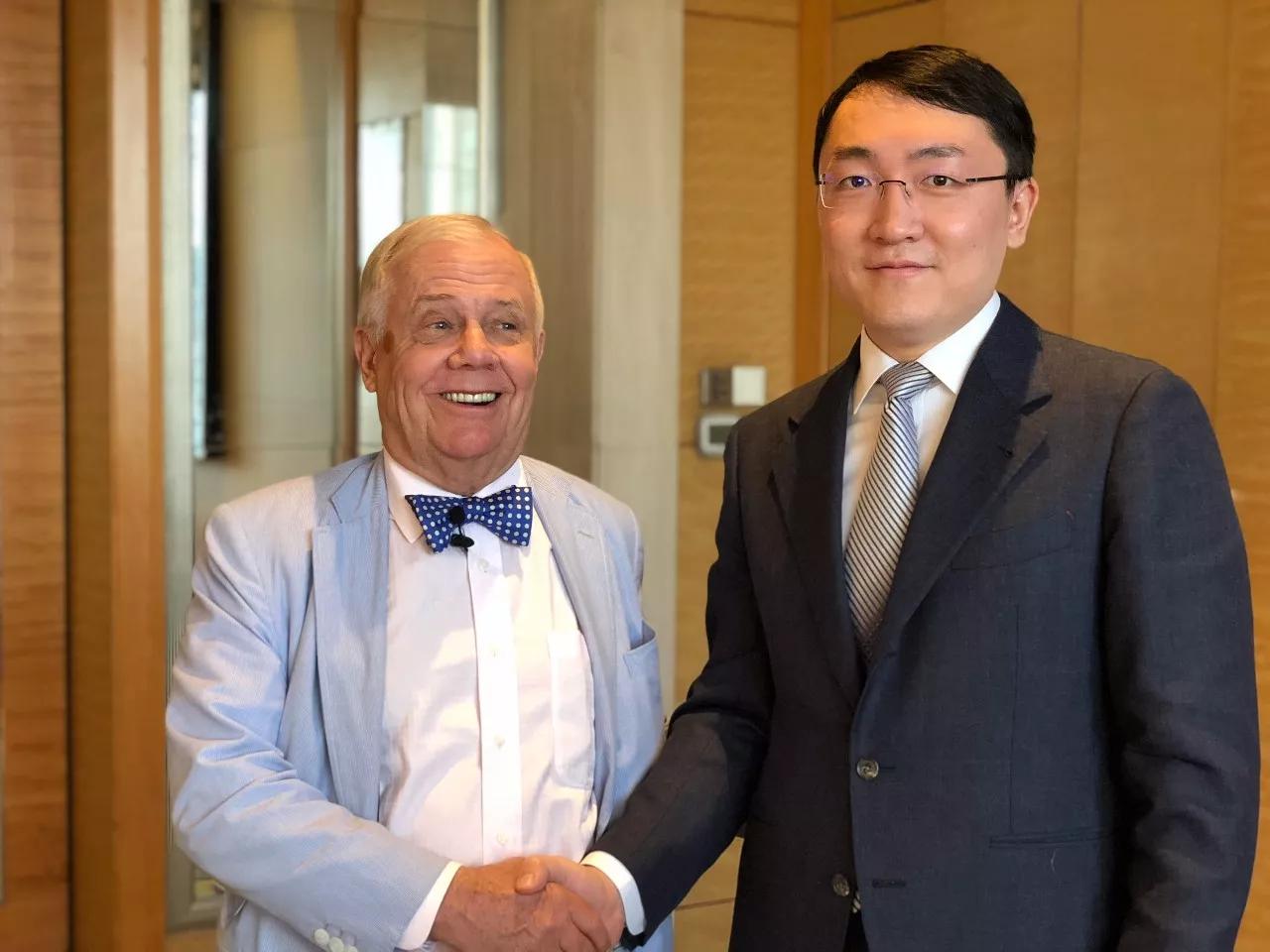
韬映资本董事总经理郭晨凯与吉姆·罗杰斯会后合影留念
关于2018全球投资机会
Alfred Guo:Okay, so last question, I think it's about the future investment opportunity, all over the world in 2018. Is there any other emerging market that, you know, you may focus on?
郭晨凯:最后一个问题是,关于未来的投资机会,在全球怎么看,或者说明年会有什么展望?除了中国还有其他的新型市场值得我们关注的,明年投资机会怎么样?
Jim Rogers: Well the places I'm looking especially are China, Japan, where I'm buying now, China, Japan, Russia, these are markets which are down. Viet Nam is down. I don't like buying things at highs. Germany's near its high and so is America and if you look around you can find markets where there are still depressed opportunities. I mentioned a few. You can look at Kazakhstan, one of your neighbors. There's still opportunities where one can buy and I'm looking more in those areas rather than markets making all time highs and by the way, most of these markets -- I mean Russia's hated. I love finding market that's hated. If things are turning around. North Korea, I cannot invest but you can. Great change is taking place in North Korea. There are countries, Russia, Japan, China, Viet Nam, there are still countries where you can find opportunities.
吉姆·罗杰斯:在我看来,中国、日本、俄罗斯、越南这几个国家的经济处于下行,美国、德国走高,我不喜欢在市场状况良好的时候投资,相反我喜欢萧条的市场。你们也可以看下哈萨克斯坦,你们的邻国。像俄罗斯,是被敌视的市场。我喜欢找到这种市场。朝 鲜,我不能投资但是你们可以。朝 鲜正在经历巨大的变化。像俄罗斯,日本,中国,越南,这些国家我们都可以看到不少投资机会。